
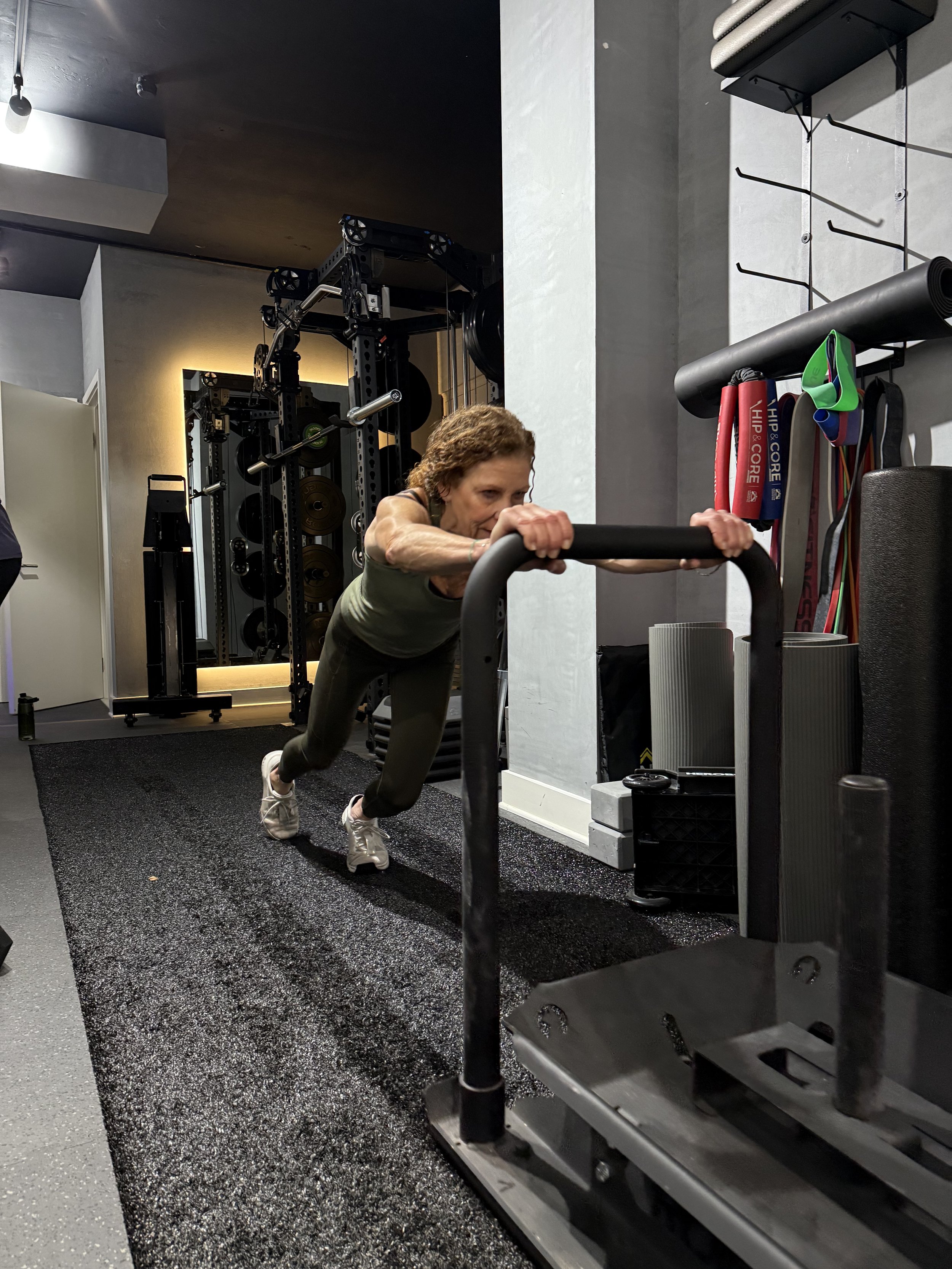
It is not too late, and that is not a platitude
Muscle and bone respond to load throughout life. People starting in their 50s, 60s and 70s routinely get stronger — often faster than they expect, because there is so much untrained capacity to claim.
The main difference from starting at 25 is not what you can achieve. It is that recovery, joint history and consistency need more respect in how the program is built.
Step one: decide what you want to keep doing
Start from function rather than aesthetics. Stairs without the handrail. A suitcase into the overhead bin. Two hours on your feet in a museum. Tennis on Saturday. Getting off the floor unassisted at 85.
Those answers determine which patterns matter, and they make the training feel worth doing on a cold February morning.
Step two: learn five patterns
- Squat — sitting down and standing up, loaded.
- Hinge — bending at the hips to pick things up.
- Push — pressing away from you, horizontally and overhead.
- Pull — rowing and pulling toward you, which most desk-bound bodies need most.
- Carry — holding load and walking, the most transferable thing you will train.
Step three: start lighter than you think, then progress
The most common mistake is a heroic first month followed by three weeks off. Begin at a load that feels almost easy, add a little each week, and let progression rather than intensity do the work.
Two sessions a week is a good target. Three is plenty. Zero for a month is the only outcome that really costs you.
Step four: add balance and bone loading deliberately
Single-leg work and weight-bearing loaded movement should be in the program from the beginning, not added later. Balance is largely strength you can control, and bone responds to load it does not usually see.
Step five: get eyes on it early
The first eight weeks are when technique habits form. A coach at the start is the difference between a decade of good training and a decade of guessing — and it is a lot cheaper than the alternative.
If you are on the Upper West Side, PWR coaches this every day at our West 72nd Street and Broadway studios.